Who Is Judge Victoria Klingensmith? Rated 6-1, Opposed by 3 of 4 Attorneys Surveyed, and on Every Douglas County Ballot This November
The Castle Rock district judge who let the commissioners' ballot wording stand is up for retention herself. The commission says she meets standards. The lawyers who answered its survey mostly said no.
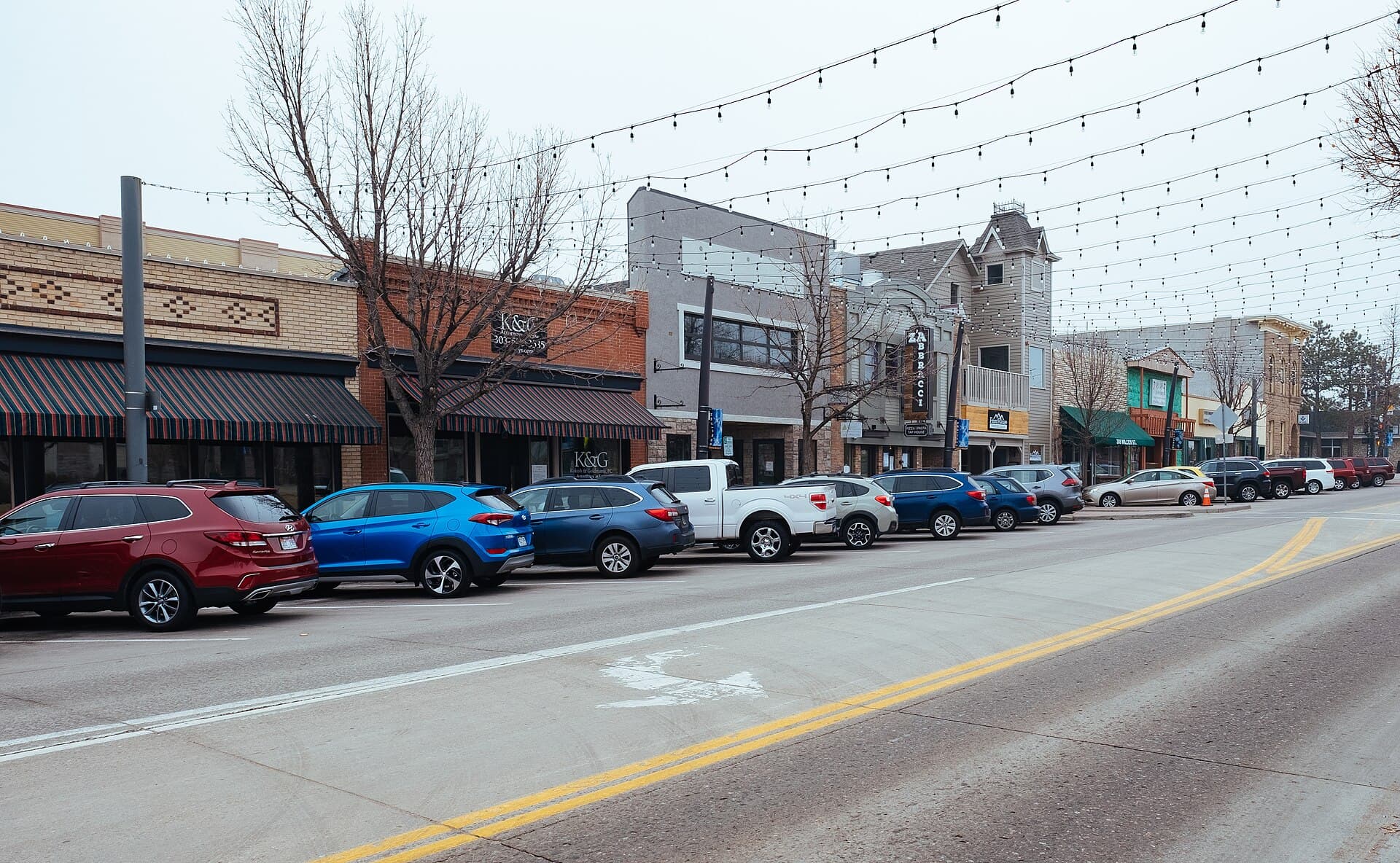
Castle Rock, Colorado. Photo: Jared Winkler, CC BY-SA 4.0, via Wikimedia Commons
Victoria Klingensmith is a district court judge in Castle Rock, and if you live in Douglas County her name is on your ballot twice over. Once literally, in the retention section, where you are asked whether to keep her for six years. And once by implication, because she is the judge who decided in September that the commissioners' wording of Questions 200, 201 and 1A would stay on the ballot, even as she said parts of it did not match state law. Here is who she is, what the evaluation commission found, and why the numbers behind that finding deserve a closer look than the other twelve judges on your ballot.
Who appointed her, and when
Gov. Jared Polis named her to the 18th Judicial District bench on July 14, 2023, to fill the vacancy left by Judge Cynthia Mares' retirement, effective September 1 of that year. The 18th then covered Arapahoe, Douglas, Elbert and Lincoln counties; the Douglas, Elbert and Lincoln courts have since become the 23rd Judicial District, which is why the 23rd's commission, not the 18th's, evaluated her this year. The court's Douglas County page lists her in Division 5.
Because Colorado judges are appointed and then face yes-or-no retention votes, this November is the first time voters get a say on her. A yes keeps her through January 2033. A no ends her term and the governor appoints someone else.
What she did before the bench
She was a career prosecutor. The appointment release in Law Week Colorado lays it out: deputy district attorney in the 18th Judicial District from 2004 to 2011, senior deputy from 2011 to 2016, chief deputy from 2016 to 2020, and senior chief deputy from 2020 until she took the bench. Before that she clerked for Judge Frank Plaut in Jefferson County. She has taught as an adjunct at the University of Denver's law school since 2019.
That is the mirror image of Rebecca Rankin Freyre, the Court of Appeals judge at the top of the same ballot section, who spent 25 years as a public defender. Voters who sort judges by background have one of each this year.
What the performance commission found
The 23rd Judicial District Commission on Judicial Performance interviewed her, read opinions she wrote, watched her in court and reviewed surveys. Its narrative is positive. It describes her demeanor as "prepared, professional, respectful, fair, and knowledgeable about criminal and civil law," says her written decisions are "clear, concise and well written," and credits her with using "her natural intellect and efficiency to track new developments in the law." The vote was 6-1 that she meets standards, with one commissioner absent and two seats on the commission vacant. The narrative calls that outcome unanimous in one sentence and 6-1 in the next; the tally is what the commission published.
Every other district and county judge on the Douglas County ballot drew a unanimous vote. Hers is the only one with a dissent, and the survey explains why.
The survey numbers
The commission's contractor emailed 193 attorneys who had appeared before her. Four answered. It also invited 407 non-attorneys and sent a self-select invitation to 2,782 court staff; five members of the public, five court staffers and one juror responded. Fifteen people in all.
"Of the four attorneys responding to the survey, 25% answered yes; 75% answered no." The 23rd Judicial District Commission on Judicial Performance, on whether Judge Klingensmith meets performance standards.
So three of the four lawyers who bothered to respond said she does not meet standards. Nine of the eleven non-attorneys said she does. Her overall score was 2.6 on the commission's 0 to 4 scale, where 2 is "adequate performance" and 4 is "outstanding." That is down from 3.1 in her 2025 interim survey, when 7 of 8 attorneys said she met standards, and 3.8 in 2024, when only four people answered at all.
The gap between the lawyers and everyone else runs through every category. On "is able to identify and analyze relevant facts," attorneys scored her 1.5 and non-attorneys 2.9. On "gives proceedings a sense of dignity," 1.5 against 3.0. On "treats participants with respect," 1.8 against 3.3. On "maintains appropriate control over proceedings," 2.0 against 2.6. Fairness was her lowest category overall at 2.5.
Two honest cautions before anyone reads too much into that. Four attorneys is four attorneys, and a survey with a 2 percent response rate among lawyers tells you about the people who chose to respond, not about the bar. And the other three district judges on this ballot cleared the attorney question comfortably on bigger samples: 75 percent of 23 for Andrew Baum, 82 percent of 12 for Theresa Slade, 82 percent of 14 for Daniel Warhola. The commission looked at the same numbers, interviewed her and watched her court, and six of seven members still said she meets standards. That is the finding that goes in the Blue Book. The raw numbers are the part the Blue Book does not print.
The ruling that put her in the news
On September 11 she heard State Rep. Bob Marshall's challenge to the commissioners' handling of the 3-to-5 ballot questions. Marshall wanted the cost sentence the commissioners put at the front of Question 200 stripped, and their own Question 1A removed. She denied both, and denied them again on reconsideration. But she did not endorse the wording. By Colorado Community Media's account she agreed the cost language "was not consistent with state statute" and found the challenge time-barred; the Colorado Times Recorder quoted her saying 1A "doesn't track that language" in the governing statute, and that courts do not fix a ballot question before an election. She called the hearing "a crash course in election law." Our full account of that ruling is here, and the explainer on how to vote the three questions is here.
She has also been to the state Supreme Court. In December 2024, in a Douglas County criminal case, she sided with a public defender seeking the Colorado Bureau of Investigation's records on former DNA analyst Missy Woods and ordered the bureau to explain why it should not release them. CBI appealed, and on June 9, 2025 the Supreme Court held that fights over those records belong in Jefferson County, where the records sit, not in an individual defendant's case. Her order did not stand. None of this appears in the commission's evaluation, which does not discuss rulings.
How to vote on her
She appears in the judicial retention section of the ballot with three other district judges, two county judges, six Court of Appeals judges and one Supreme Court justice. A yes keeps her for six years; a majority of the votes cast on the question decides it. Retention judges do not campaign, and we found no organized opposition to her. All thirteen judges on the Douglas County ballot drew a "meets standards" finding this year; our page on all thirteen has every narrative and vote count.
More: every race and measure on your ballot, the November ballot guide, and where to vote. We do not endorse candidates or take positions on judicial retention. Corrections to hello@discoverdougco.com.
*Election night: live results for every Douglas County race, measure and judge, with the first numbers after 7 p.m. on Nov. 3. Before then: where to vote in person, every drop box, and the deadlines, and who has voted so far.*
Local DougCo news worth your inbox
We dig into the Douglas County stories — elections, development, what's opening — that the big outlets skip. Free, no spam.
No spam. Unsubscribe anytime.
Comments
Sign in with Google to commentLoading comments…