Who Is Judge Elizabeth L. Harris? Appointed by Hickenlooper in 2015, Rated 9-0 After a 6-3 Vote in 2018, and on Every Douglas County Ballot This November
A former federal public defender and appellate lawyer, she is asking for a second eight-year term. Who appointed her, what the commission said about her timeliness in 2018 and again this year, how Douglas County voted on her last time, and the records case the Supreme Court reversed in March.
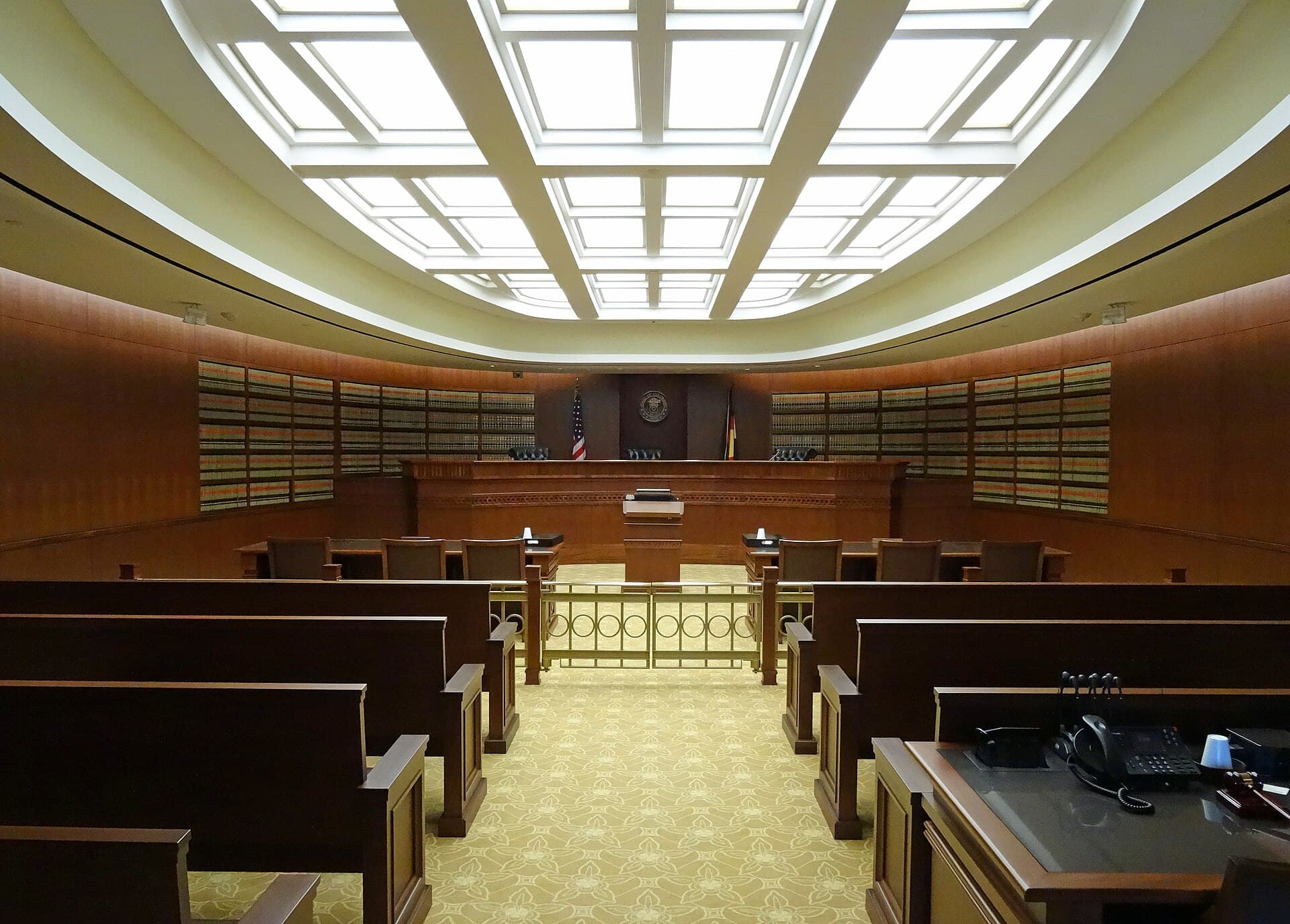
The Ralph L. Carr Colorado Judicial Center in Denver, home of the Court of Appeals. Photo: Jeffrey Beall, CC BY 3.0, via Wikimedia Commons
Elizabeth L. Harris is a judge on the Colorado Court of Appeals, and her name is on every Douglas County ballot this fall with the same question attached as the other twelve judges: shall she be retained in office? Nobody is running against her and she does not campaign. She has been through this once before, in 2018, and that first review was pointed. Here is who she is and what the record says, from the governor's announcement, the court's records, the Secretary of State and the commission that evaluated her twice.
Who appointed her, and when
Gov. John Hickenlooper announced her appointment on May 29, 2015, to fill the vacancy left by the retirement of Judge James S. Casebolt, effective July 1, 2015. Law Week Colorado reported the same day that her tenure would begin July 1. The court's own biography page gives a different date, July 23, 2015, and no document we read explains the gap; the governor's release and the contemporaneous coverage agree on the summer of 2015.
She served the two-year provisional term every new Colorado judge serves and stood for retention in 2018. This November she is asking for a second full eight-year term.
What she did before the bench
Her career before the court was almost entirely appellate and mostly on the defense side. After clerking for Judge John Porfilio of the 10th Circuit from 1996 to 1997, she spent six years at the Office of the Federal Public Defender in Colorado, first as a research and writing attorney and then as an assistant federal public defender. In 2003 she joined Jacobs Chase, the firm later acquired by Husch Blackwell, where the governor's release says she was an associate, of counsel and partner. In 2013 she opened her own practice, which the release described as "focusing primarily on appellate work, criminal defense and civil litigation." She graduated from Georgetown University in 1989 and New York University School of Law in 1996.
What the performance commission found, twice
The State Commission on Judicial Performance evaluates every appellate judge up for retention. In 2018, her first review, it found she met performance standards by a vote of 6 to 3, the only split vote any judge on this year's Douglas County ballot has drawn from the State Commission. That narrative said she "received low marks for making decisions based on the law and facts and also for reaching issues that need not be decided," that the commission itself agreed "Judge Harris at times reaches issues that she need not decide," and that "lack of timeliness also has been a problem for Judge Harris, although she has shown substantial improvement." It also credited her "strong writing skills, diligence, and a commitment to fairness." In 2018, 65 percent of responding attorneys and 90 percent of judges said she met standards.
In 2026 the vote was 9-0, with one commissioner absent and one seat vacant. The commission found "her opinions are clear, well-written, and reasonably timely," praised her preparation and command of the record at oral argument, and commended her community service and her work on the Court of Appeals and Supreme Court summer internship program. It did not drop the earlier concern entirely: "Lawyers noted the length of time required for Judge Harris to issue an opinion as a weakness," and "Judges also noted Judge Harris' timeliness in issuing decisions as a weakness." The commission said it was confident in its finding even with a small survey "because 93% of responding judges and attorneys agreed."
"Lawyers noted the length of time required for Judge Harris to issue an opinion as a weakness." The State Commission on Judicial Performance, 2026.
The survey numbers
The contractor invited 441 attorneys and 280 judges; 5 attorneys and 22 judges answered. All five attorneys and 20 of the 22 judges said she meets standards. Her overall score was 3.6 out of 4, and the trend is the most striking thing in the report: 2.8 in 2020, 3.0 in 2021, 3.4 in 2022 and 2023, 3.5 in 2024, 3.4 in 2025, 3.6 now. The one low number left is timeliness. On "issues opinions in a timely manner," the 20 judges who answered scored her 2.2, where 2 is "adequate," against 3.4 to 3.8 on every other writing question. The five attorneys scored her 4.0 on clarity, explaining the basis of a decision, and reasoning from the law and facts.
How Douglas County voted on her in 2018
The Secretary of State's official abstract shows she was retained statewide by 1,268,530 to 729,496, or 63.49 percent yes. In Douglas County the vote was 81,154 yes to 53,362 no, 60.33 percent, a little below her statewide share.
The "voting record" question
Appellate judges do not have a voting record in the legislative sense; they write and join opinions, and hers are public in the Colorado Judicial Branch's opinion database. One of them was reversed this spring. In November 2023 she wrote a division opinion in a Colorado Open Records Act case brought by the Colorado Sun and 9News, which had asked the state Department of Human Services for the number of child abuse or neglect reports made from each of three state-funded residential child care facilities. Her division sent the case back to the trial court for factual findings. On March 30, 2026 the Colorado Supreme Court reversed, holding that the department must disclose the six numbers the news organizations asked for. The Supreme Court's opinion does not name her; the link is the 2023 opinion's own byline. We have not reviewed a sample of her other opinions and will not characterize them beyond what the commission wrote.
As for party: the ballot lists none for any judge, she was appointed by a Democratic governor from a short list sent by a judicial nominating commission, the Douglas County Republican Party's online voter guide recommends retaining her, and we found no organized opposition to her.
How to vote on her
She appears in the judicial retention section of the ballot with five other Court of Appeals judges and one Supreme Court justice. A "yes" keeps her for eight years; a "no" removes her at the end of this term and the governor appoints a replacement; a majority of the votes cast on the question decides it. Retention judges do not campaign, and we found no organized opposition to her. All thirteen judges on the Douglas County ballot drew a "meets standards" finding this year; our page on all thirteen has every narrative and vote count.
More: every race and measure on your ballot, the November ballot guide, and where to vote. We do not endorse candidates or take positions on judicial retention. Corrections to hello@discoverdougco.com.
*Election night: live results for every Douglas County race, measure and judge, with the first numbers after 7 p.m. on Nov. 3. Before then: where to vote in person, every drop box, and the deadlines, and who has voted so far.*
Local DougCo news worth your inbox
We dig into the Douglas County stories — elections, development, what's opening — that the big outlets skip. Free, no spam.
No spam. Unsubscribe anytime.
Comments
Sign in with Google to commentLoading comments…