The Case for Greg Lopez: Why the Independent Candidate for Colorado Governor Is the Right 2026 Vote for Independents and Republicans
Greg Lopez, the unaffiliated former Parker mayor and congressman, is the third name in the Colorado governor race 2026. For Douglas County independents and Republicans who think the state got worse under Polis and cannot vote for Victor Marx, here is the case for marking it.
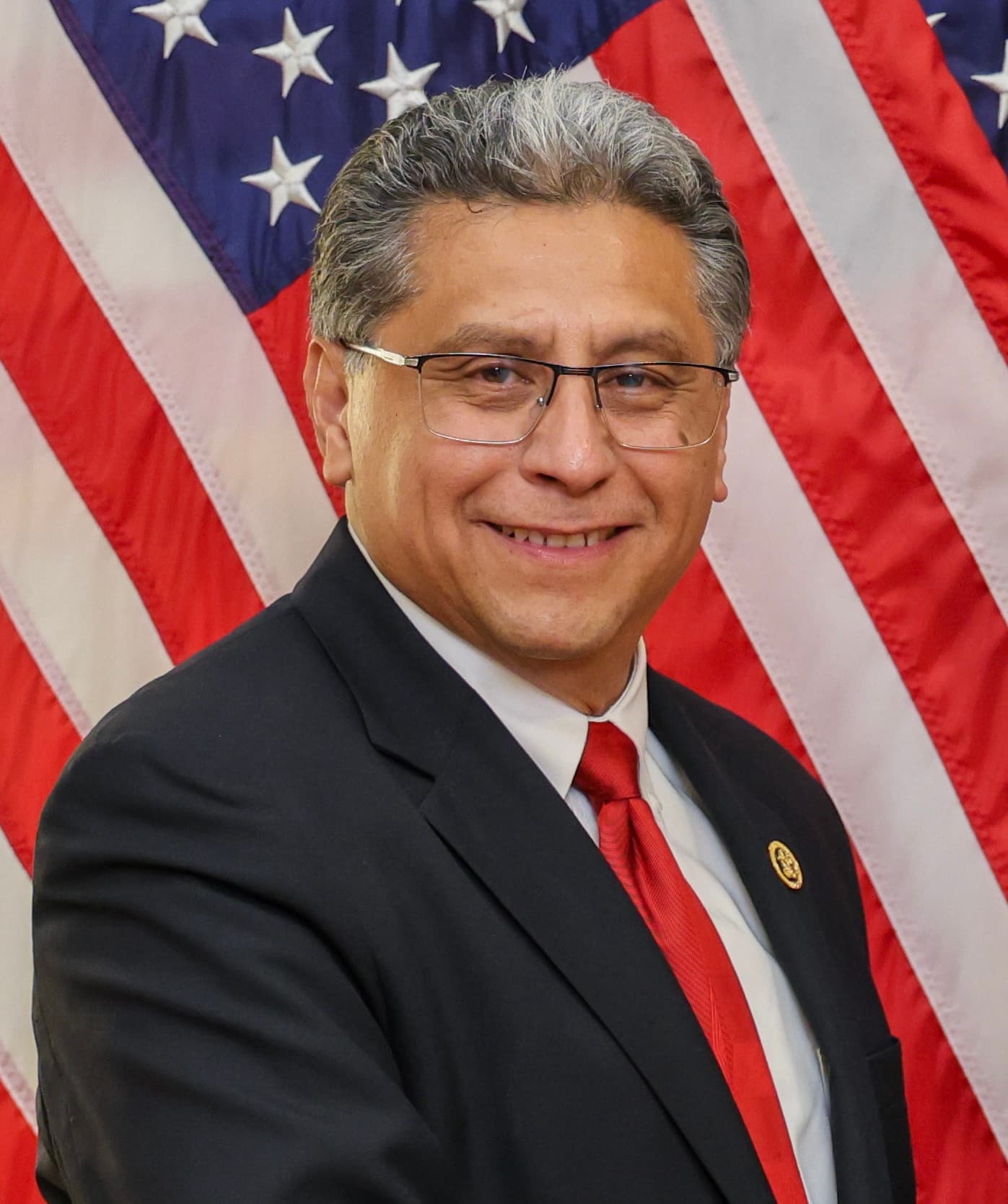
Photo: Office of the Speaker of the U.S. House (public domain)
This piece is for a specific voter. You have lived in Colorado long enough to remember what a starter home cost here, you have watched the state budget grow faster than your paycheck, and you have decided the people running the Capitol for the last eight years do not deserve another four. You would ordinarily vote Republican to say so. This year the Republican is Victor Marx, and you have read enough about him to know you cannot.
That voter is not rare here. Half of Douglas County's active voters belong to no party at all, and statewide the figure is 2,034,154 of 4,006,449. Three names matter on the governor line in 2026: Democrat Phil Weiser, Republican Victor Marx, and the independent candidate for Colorado governor, Greg Lopez. If you are one of those unaffiliated voters, or a Republican who feels like one this year, we think the right vote is Lopez. Not because he is going to win. Because of what the vote says, and because he is the only candidate on the line who is both a serious person and a break from the last eight years.
$575,000
Colorado's median single-family price this September, up from $398,875 in November 2019
$49.7B
the state's total operating budget for 2026-27, up from $30.6 billion in 2018-19
468
violent crimes per 100,000 Coloradans in 2025, against 397 in 2018
12,100
more people left Colorado for other states than arrived in 2025, the first net loss since 2004
Colorado under Polis and Weiser: eight years, one ledger
Start with the premise, because the premise is the whole argument. Is Colorado better or worse than it was when Jared Polis and Phil Weiser took their oaths in January 2019? The honest answer is mixed, and we are going to give you both columns, because a case built on the bad column alone is the kind of thing Marx would write.
The bad column is long. The median single-family home in Colorado sold for $398,875 in November 2019, according to the Colorado Association of Realtors. This September it was $575,000, and that is after prices slipped nearly a point from last year. The state's own demographers put the housing shortfall at 106,000 units and say Colorado needs 34,100 new homes a year for a decade to close it. The Denver-area consumer price index rose 3.9 percent in the year to July, and sits about 31 percent above its 2019 average. Xcel's electric rates are up 22 percent in three years by the Public Utilities Commission staff's own count, headed for about 28 percent under the settlement the commission approved in August, which added $5 a month to a residential bill. The delivery fee on everything you order went to 31 cents on July 1. None of that is the governor's doing alone. All of it happened on his watch, and his attorney general's.
The state itself grew faster than any of it. The Joint Budget Committee's appropriations report for 2018-19, the last Hickenlooper budget, shows $30.6 billion in total operating appropriations, $11.4 billion of it from the General Fund, and 58,969 full-time state positions. The same report for 2026-27 shows $49.7 billion, $17.5 billion from the General Fund, and 68,455 positions. That is a 62 percent larger state against 31 percent inflation, with Medicaid alone now a $20.6 billion line. And it still was not enough: the budget Polis signed in May had to close a $1.5 billion shortfall, and the TABOR surplus that put $750 checks in mailboxes in 2022 and $800 the year after is down to a preliminary $300 million.
Source: Colorado Association of Realtors; Joint Budget Committee appropriations reports; Legislative Council and BLS CPI; Census ACS; BLS; FBI 2018 and CBI 2025; HUD. Percent changes are our arithmetic on the sourced figures.
Then the people. The state's violent crime rate was 397 per 100,000 in the FBI's 2018 count. The Colorado Bureau of Investigation's 2025 count is 468, and that is after a 10.7 percent drop last year; the two agencies count a little differently, so treat it as direction, not decimals. Colorado ranked first in the nation in auto theft from 2020 through 2022 and second the two years after. Fentanyl killed 102 people here in 2018 and 1,089 in 2023. The federal point-in-time homeless count went from 10,857 in 2018 to 16,687 in January 2025, after an 18,715 peak the year before. And for the first time since 2004, more people moved out of Colorado to other states than moved in: a net 12,100 last year. The county that added the most people of any in the state was this one, up 7,181, which tells you something about where Colorado's own residents still want to live and what they are willing to pay for it.
Now the good column, because it exists. Unemployment was 3.0 percent in December 2018 and is 4.1 percent now, which is low by any historical standard even if payrolls have been flat since January 2025. Median household income went from $71,953 to $97,113 between 2018 and 2024, about 8 percent ahead of inflation. Property crime and auto theft are both below their 2018 levels now, and auto theft is down nearly 60 percent from the 2022 peak. Colorado fourth graders still read above the national average. Full-day kindergarten is free and universal preschool exists, even if Axios and Chalkbeat rated several of the governor's claims about it misleading or false. CNBC ranked Colorado the 11th best state for business last year, dragged down by a 47th-place finish on cost of living.
And the fairness point the governor's critics usually skip: the two permanent income-tax cuts of the last eight years, from 4.63 percent to 4.55 to 4.40, were citizen initiatives that voters passed over the heads of the Capitol. The fees grew on the legislature's say-so. The tax cuts came from you.
So the ledger is not a catastrophe. It is a state that got richer on paper and harder to live in, that spent much more and bought a shortfall, that is safer than it was three years ago and less safe than it was eight, and that for the first time in a generation is a place people leave. If you think that record earns a promotion for the attorney general who served alongside it for the entire stretch, vote for Weiser; he is a capable man, and he told the Gazette plainly what he would do with the job: "As Governor, I'll prioritize changing TABOR." If you think it earns a change, keep reading.
Why Victor Marx is not the protest vote in the Colorado governor race
The ordinary way to vote for change is to vote for the other party. We would understand a Douglas County voter who holds his nose and does that. We think it is a mistake this year, and the people who know Marx best agree with us.
Marx won the Republican nomination with 39.9 percent of the primary vote, about 2,500 votes ahead of state Sen. Barbara Kirkmeyer, who carried this county 42.69 to 37.56. Kirkmeyer's verdict in May: "I don't think he's fit to be governor, and I think he would be a disaster for our state." Scott Bottoms, the third candidate: "He's a con man. He's lied to me personally." Neither has endorsed him. Kirkmeyer's concession statement in July ended with: "for the record, I still haven't killed anyone."
Then there is the campaign he has run. In July he told Colorado Politics, "I'm only doing one debate... That is my strategy," and challenged Weiser to a contest with no moderator. He skipped the Colorado Springs debate in August and Club 20 in September, the two stages where Lopez and Weiser spent an hour each answering questions. He appeared once, at the Oct. 8 Chamber forum, after the questions were provided in advance and 9News's Kyle Clark was replaced as moderator, and spent part of it telling Weiser, "Sir, you owe us an apology," over a remark about his wife. Polis and Heidi Ganahl debated four times in 2022. Polis and Walker Stapleton debated eight times in 2018. Marx is asking to run a $50 billion enterprise and would not sit for a second job interview.
On Oct. 2 a state hearing officer fined his campaign $57,647.16 for campaign-finance violations, writing that "the scale of the violations is without precedent... and intentional." Marx called it a "political penalty" and is appealing; in July he had called the complaint a "nothing burger." His published platform cited a statute that had already been repealed, per the Denver Post. In a recent TV interview, per Colorado Politics, he vowed to "consecrate the state back to God" when he takes office. Dick Wadhams, who ran the state party, called this one "the strangest campaign I've seen in all the years I've been involved in this business," and then endorsed Lopez.
A protest vote for Marx does not read as a protest against Polis. It reads as a vote for Marx. Weiser's campaign will count it that way, the national press will count it that way, and the Republican Party will take it as proof that a nominee can skip the debates, insult the moderators, get fined for intentional violations and still bank the base. If you want your discontent with the Capitol to register as discontent with the Capitol, it has to go somewhere that cannot be mistaken for an endorsement of this.
The Greg Lopez platform: what the independent candidate for governor is offering
Lopez's pitch is short enough to fit on a bumper sticker, and it is the same one he wrote into his 2024 pledge: "People over politics, do no harm and do what works." What is under it is more specific than most Republican platforms we have read this cycle, and almost all of it is aimed at the ledger above.

On spending, he wants zero-based budgeting, every department justifying every dollar from zero, and he has told the Gazette: "Before asking taxpayers for another dollar, government should prove it is spending the dollars it already receives wisely." His diagnosis of the shortfall is the legislature itself: "When the legislature passes 600 laws every single year, and most of them will have a fiscal note, it just causes more expenditures on the already straining budget." At Club 20 his refrain for every proposal was a question Colorado has stopped asking: "How much is it going to cost us?" He would defend TABOR and the refunds, which puts him on the opposite side of the only candidate who can win.
On housing, the plank that matters most to a county that added 7,181 people last year, he wants the state to clear the way for 25,000 starter homes of about 1,100 square feet at about $235,000 in a first term, and he names the obstacle most candidates will not: water and sewer taps that run "over thirty thousand dollars each" before a foundation is poured. On energy he is all-of-the-above including nuclear, and he says he will review the appointments to the Public Utilities Commission, the body that approved those Xcel increases. On the rest: buy E-470 and take the tolls off, split Game and Fish from State Parks, tell the federal government the state cannot carry the wolf program, restore qualified immunity, keep Colorado a non-sanctuary state, and, in the words he used at the August debate, "never take local control away from a jurisdiction." On data centers, the issue this county is actually fighting about, he says "the jury is still out" and that any project should use Colorado companies and protect Colorado water.
We would quarrel with pieces of it. A 25,000-home program needs a financing mechanism his site does not supply. Buying a toll road is a bigger check than the plank admits. But it is a platform written by someone who has run a government and a federal agency, and it is answerable to the numbers in the chart above in a way neither opponent's is.
The Greg Lopez record: Parker mayor, SBA director, six months in Congress
Lopez was elected mayor of Parker in 1992 at 27, by 33 votes, as a Democrat. He switched parties in office, vetoed a residential project he thought the town was being sold, accused council members of ties to the builders, and was investigated for it; no charges followed. He went on to run the Small Business Administration's Colorado office from 2008 to 2014 under a Democratic president, moving $600 million in loans in 2013 alone, and to help start the ACE Scholarship Foundation, which pays private-school tuition for low-income kids.
In 2024 this county's voters already hired him once. He won the 4th District special election 58.4 to 34.4 statewide and carried the Douglas County portion by 11.8 points. He went to Washington for six months with three written pledges in the Denver Post: no individual stock trades, miss no votes, people over politics. He introduced five bills, including a guest-worker program for agriculture and a resolution against ranked-choice voting; none passed, which is what happens to a six-month placeholder. What he did do is vote no on every continuing resolution that crossed his desk, including the Dec. 20 bill that passed 366 to 34 with his name among the 34 Republicans against. He told CPR on the way out: "I came to work." For a man who ran for governor twice as a Republican and lost both primaries, it was an unusually quiet exit.
Then on Dec. 30, 2025, he and his wife Lisa changed their registration to unaffiliated, in his words "not because it was convenient, not because it was safe, but because it was honest."
Both parties raise money better than they solve problems. They divide better than they listen.
That line is from his announcement video. We have quoted it on this site before and we quote it again because it is the most accurate sentence any candidate for governor has said this year, and because the man who said it then went and sat for every debate he was invited to while the two party nominees raised $13 million between them.
The honest ledger on Greg Lopez
We are asking you to vote for him, so you are owed the part his campaign does not lead with.
In 1993, the year after he became mayor, he and his wife were both charged after a domestic incident and both pleaded guilty to harassment. CPR's 2022 account, drawn from the records, has her saying she struck first and him pushing her to the ground and kicking her; he denies pulling her hair. She has written that "we simply made a terrible mistake." He has a 2003 DUI. In 2020 he paid $15,000 to settle a Justice Department case over an email he sent after leaving the SBA asking a favor for a developer; the U.S. attorney at the time, Jason Dunn, called it "serious violations of the rules for former federal officials." His 2018 campaign video showed a Purple Heart that was not his. In 2022 he said Trump won the 2020 election and opposed abortion with no exceptions; his 2026 platform is softer on the second point and silent on the first. He was left out of the Oct. 8 Chamber forum. He has $15,686 to spend against Weiser's $8.87 million and Marx's $4.26 million.
We have weighed those. The domestic case is 33 years old, adjudicated, and acknowledged by both people in it. The DOJ settlement is the one that gave us the most pause, because it goes to how he used a public office, and we would want him asked about it directly in any forum that will have him. Against that record stands a man whom voters have been examining in races going back to 1992, whose one campaign-finance complaint this cycle was dismissed for lack of facts, and whose opponent on the Republican line was just found to have committed campaign-finance violations "without precedent" and "intentional." We know which set of problems we would rather have in a governor.
Can Greg Lopez win? No. Here is what the vote does
He cannot. The most useful precedent is 2010, when Tom Tancredo ran for governor on the American Constitution line, took 36 percent statewide, and won Douglas County outright with 48 percent while the Republican nominee, Dan Maes, got 11 here. Tancredo lost to Hickenlooper by 15 points. Nobody in Colorado politics has forgotten the election, and the party spent the next decade making sure its nominee could never be that weak again. Then it nominated Marx.
Your vote for governor this year is not going to pick the governor. Weiser's money and the arithmetic of a three-way race have done that. What it can do is register, precisely and legibly, what you think of the last eight years and what you think of the party that is supposed to be the alternative. A Lopez vote in Douglas County says: we want a change at the Capitol, we want it to be about spending and housing and cost, and we are not available to a nominee who will not show up for the job interview. A Marx vote says something else. A Weiser vote says you are satisfied. Our analysis of the race says Lopez's share here is the number that decides whether Marx records the worst Republican result in this county since 2010; if that matters to you as a Republican, it is the only lever you hold.
The Republican veterans who have already pulled it understand this. Wadhams, Lundberg, Phelan, former Denver GOP vice chair Hugo Chavez-Ray and former congressional nominee Casper Stockham are not voting for Lopez because they expect him to be governor. They are voting for him because they want the record to show the party's nominee was not the conservative choice. Ken Buck, for what it is worth, went the other way and endorsed Weiser on Oct. 14. Lauren Boebert backs Marx. You can decide which company you would rather keep.
More: the Greg Lopez profile, why his share here is the number that matters, the full three-way race as seen from Douglas County, and every race and measure on your ballot. This is the Editorial Team's argument; the race page and the profiles stay descriptive. Campaigns can send corrections to hello@discoverdougco.com.
*Election night: live results for every Douglas County race, measure and judge, with the first numbers after 7 p.m. on Nov. 3. Before then: where to vote in person, every drop box, and the deadlines, and who has voted so far.*
Local DougCo news worth your inbox
We dig into the Douglas County stories — elections, development, what's opening — that the big outlets skip. Free, no spam.
No spam. Unsubscribe anytime.
Comments
Sign in with Google to commentLoading comments…