Greg Lopez found the Colorado GOP's clearest path back to the governor's office. The party won't take it.
A former Parker mayor and Republican congressman left his party to run for governor as an independent. The strategy has nearly worked for outsiders in other states. In Colorado it would require the GOP to do the one thing it has refused to do: get out of its own way.
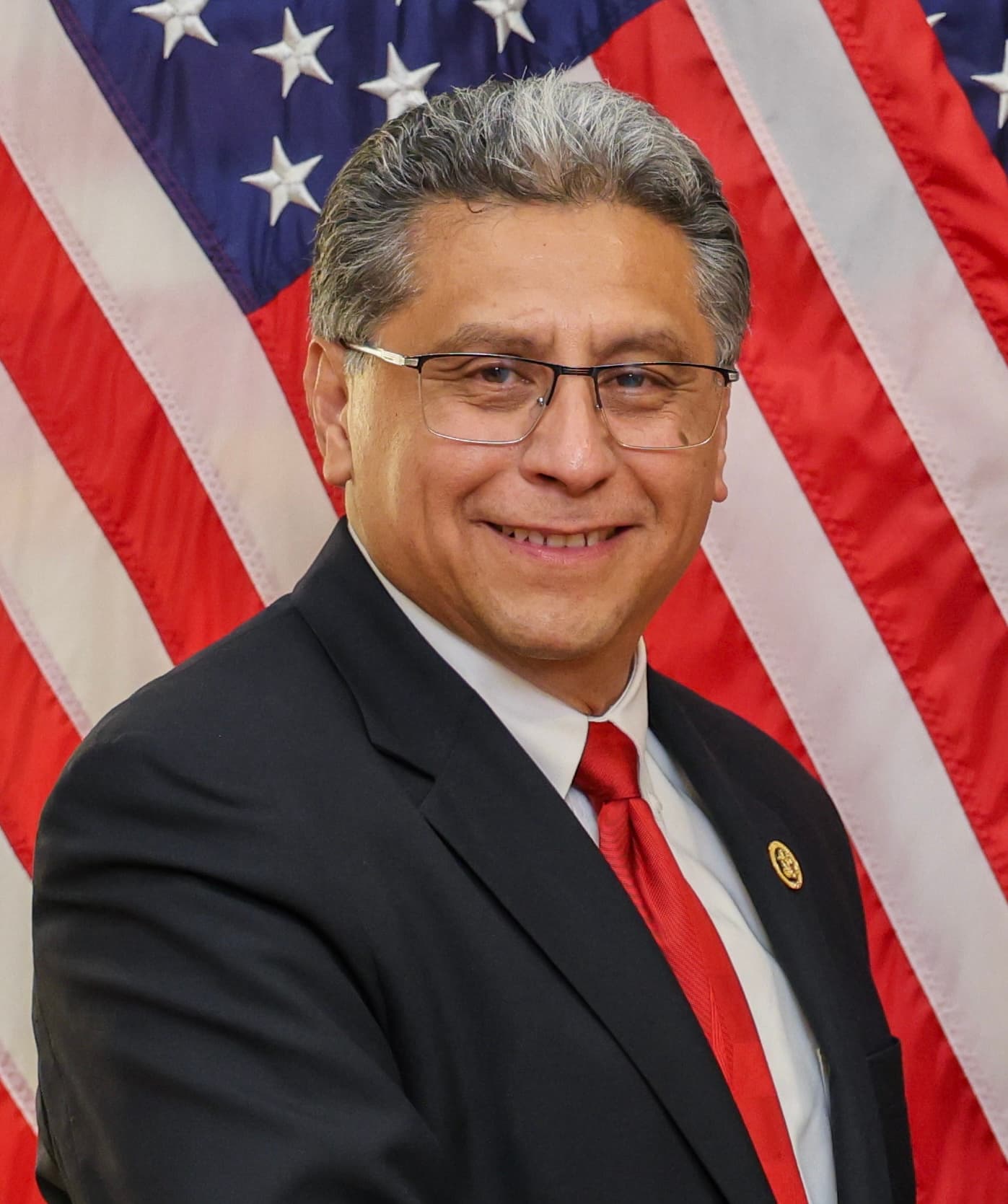
Photo: Office of the Speaker of the U.S. House (public domain)
Update, July 29: he made it. The Secretary of State certified the petition on July 28: 11,948 valid signatures, with more than 1,000 in each congressional district. Lopez and Romero will appear on the November 3 ballot. Full analysis of what a three-way race means for Douglas County is here.
Greg Lopez has run for governor of Colorado twice, both times as a Republican, and lost both times. His third campaign is different in one way that matters: he has left the party. In the final days of 2025 he and his wife re-registered as unaffiliated, and he is now trying to reach the November ballot with no party behind him. Whatever you make of the man, the strategy deserves a serious look, because a version of it has come closer to working in places like this than anything his old party has tried in years.
A Douglas County name
Lopez is not an abstraction here. He was mayor of Parker in the 1990s, won the 2024 special election to fill Ken Buck's CD-4 seat, the district that covers nearly all of Douglas County, and served about six months in Congress. He ran the Small Business Administration's regional office and sought the Republican nomination for governor in 2018 and 2022. He is one of the most recognizable names this county has sent toward statewide office.
The strategy, and where it has worked
Start with the evidence from elsewhere. In 2024, an independent named Dan Osborn, a Navy veteran and union mechanic, ran for U.S. Senate in Nebraska, one of the reddest states in the country, and lost by seven points. The figure that drew national attention was a different one: Osborn ran about fourteen points ahead of the Democratic presidential nominee in the same state, the strongest independent showing in Nebraska's history. He managed it because the Democratic Party did not field a candidate against him. By 2026 the approach had a name and a paper trail; the Washington Post described a deliberate Democratic strategy of backing independents over the party's own nominees in states where the Democratic label cannot win.
The mechanism is the part to understand. This is not a third candidate splitting the vote. It is the weaker party stepping aside and removing its own label, so that the large group of voters who will not back that brand can still vote against the party in power. It works only when the disadvantaged party is willing to subordinate itself.
Why Colorado is the test
Colorado is the reverse of Nebraska, and that is what makes Lopez worth watching. The state has voted for the Democratic presidential candidate in five straight elections. It has not elected a Republican governor since 2002. Democrats currently hold every statewide office and majorities in both chambers of the legislature. By any measure, the party that cannot win statewide under its own name in Colorado is the Republican Party.
So the strategy that nearly worked for an independent in Nebraska would, in Colorado, require Republicans to do what Nebraska's Democrats did: step aside and get behind an unaffiliated candidate who can reach the voters the party keeps losing. Lopez, intentionally or not, is offering his former party that option.
There is little sign it wants it. The Colorado GOP is running a full primary and will nominate its own candidate for governor, which means that if Lopez makes the ballot, the votes opposed to the Democrat will be divided between a Republican and an independent rather than consolidated behind one. The party's operating assumption, cycle after cycle, is that it can win outright. The record is the trouble with that assumption. Two decades without a governorship, a statewide sweep against it, and a legislature it does not control are a long run of evidence that the label itself has become the obstacle, and the plan on offer is the same one that produced those results.
That is the quiet argument of Lopez's campaign. A party reading its own numbers honestly might look at a former congressman positioning himself for the exact bloc it cannot reach and see an opening. Treating him instead as a defection to be ignored is a choice, and on the evidence it is a choice to keep losing.
The county is the tell
Douglas County makes the point close to home. This was Republican bedrock, and as we documented in our District 1 commissioner deep dive, it has moved from solidly Republican to a county where unaffiliated voters now outnumber either party. The ground is shifting fastest in the places the GOP used to count on, and Lopez, a Parker product, is reading that shift more plainly than his old party is.
The honest catch
Two things keep this from being a tidy story. Lopez is not Osborn: Osborn's appeal was that he had never been a partisan, while Lopez has been a Republican mayor, a Republican congressman, and a two-time Republican candidate for governor, and a December change of registration does not erase that record. And he has not qualified yet. As of late June the Secretary of State had not confirmed his petition signatures, so he is a declared candidate still working to make the ballot. Watch the certification, not the announcement. For the races already set, including the governor primaries, see our 2026 Douglas County ballot guide.
Bottom line
Greg Lopez left his party to run the one strategy that has shown it can pull red-state voters off their habit, and in Colorado that strategy only works if the Republican Party is willing to step aside for it. Everything about the party's behavior says it will not. Whether Lopez gathers his signatures is the near-term question. Whether a party that has not won the governor's office in more than twenty years will ever try the one approach that might change that is the larger one, and so far the answer is no.
More: see what to watch in Tuesday's primary and follow the live results as they come in.
Sources
- Former U.S. Rep. Greg Lopez leaves GOP, will run for governor as an independent — Colorado Politics
- Democrats test a new red-state strategy: back independents over their own nominees — The Washington Post
- Major shake-up in crowded Republican primary for Colorado governor — CPR News
- Greg Lopez for Colorado Governor — Greg Lopez campaign
- 2026 Colorado gubernatorial election — Wikipedia
Local DougCo news worth your inbox
We dig into the Douglas County stories — elections, development, what's opening — that the big outlets skip. Free, no spam.
No spam. Unsubscribe anytime.
Comments
Sign in with Google to commentLoading comments…